
Why Influencer Databases Fail Brands: The Stale Data Problem
Key Takeaways
- •Influencer databases serve cached data that can be months old, follower counts, engagement rates, and audience demographics may no longer reflect reality.
- •Databases only surface previously indexed creators, missing emerging talent and causing brands to compete for the same over-contacted influencers.
- •Real-time evaluation fetches current data at query time, ensuring decisions are based on accurate, up-to-date metrics.
Last month I pulled up a creator profile on one of the major influencer platforms. The dashboard showed 87,000 followers, 4.1% engagement rate, audience skewing 72% US-based. Solid numbers for a mid-tier fitness creator.
Then I checked their actual Instagram profile. 143,000 followers. Their last 10 posts averaged 1.8% engagement. And based on comment language patterns, their audience had shifted significantly international after a viral moment in Brazil three months prior.
The database wasn't wrong, it was just frozen in time. A snapshot from whenever their scraper last visited that profile.
How Influencer Databases Actually Work
Most influencer marketing platforms follow the same architecture. They run scrapers across Instagram, TikTok, and YouTube, pulling public profile data into a centralized database. Follower counts, engagement metrics, audience demographics, content categories, all indexed and made searchable.
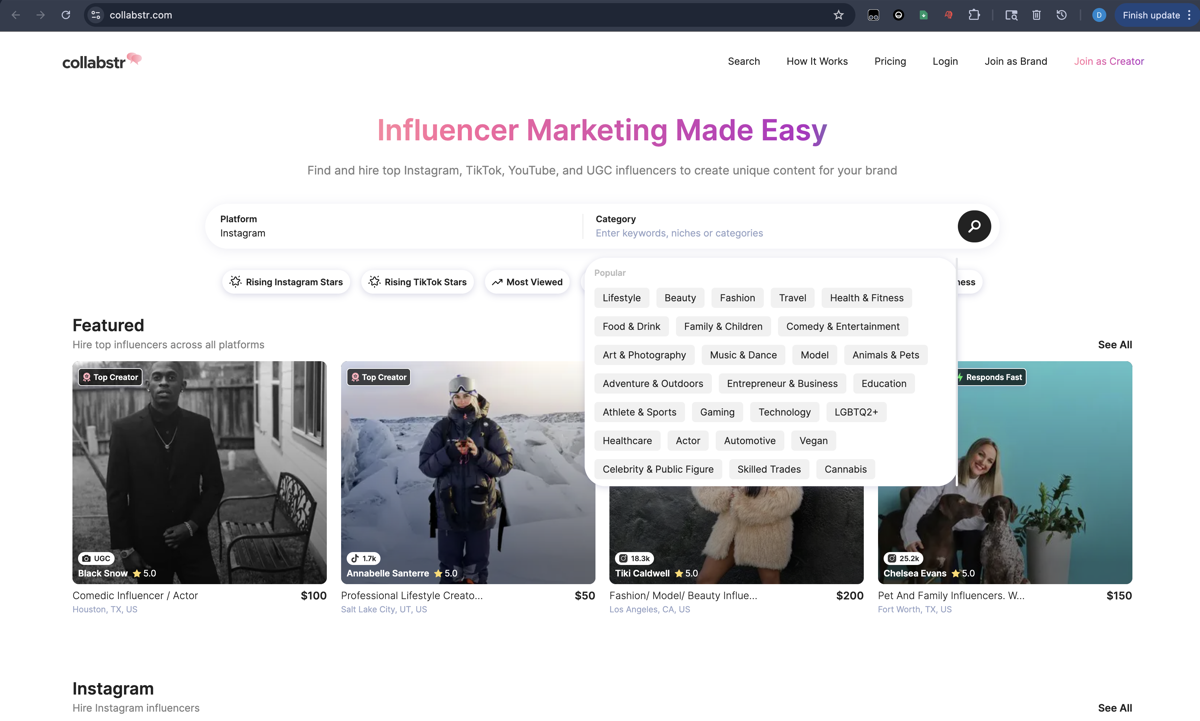
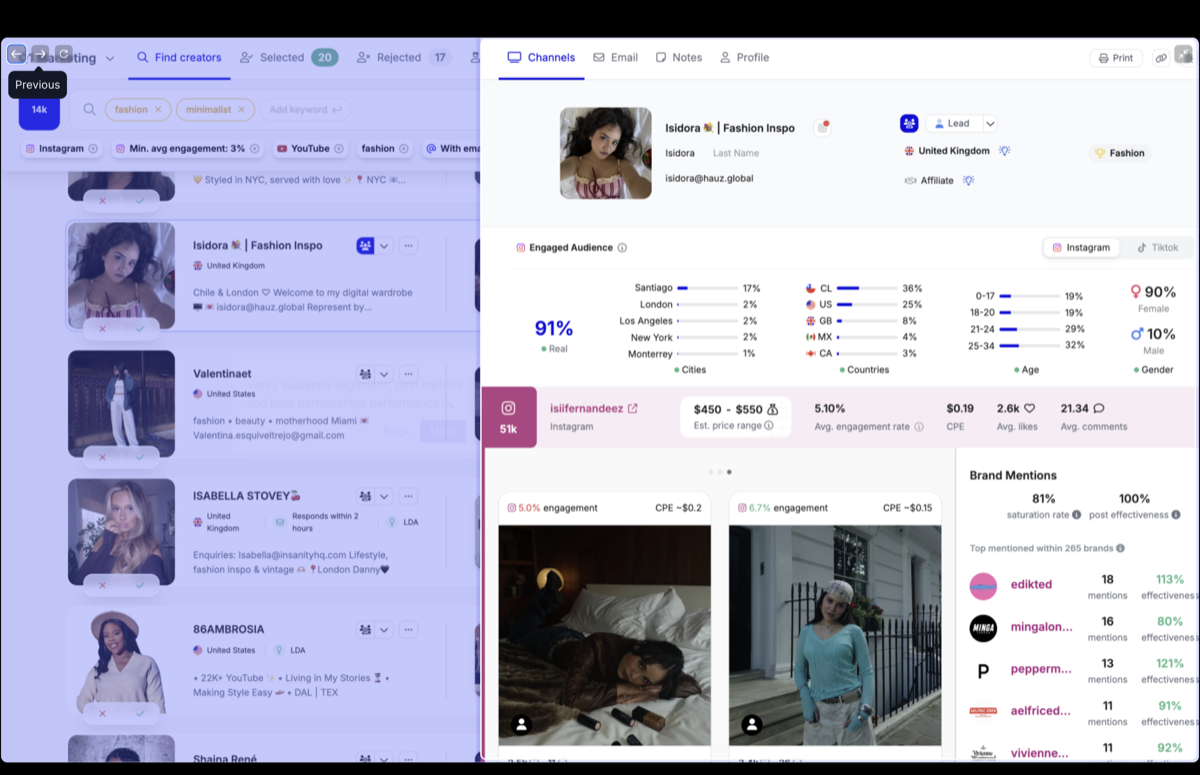
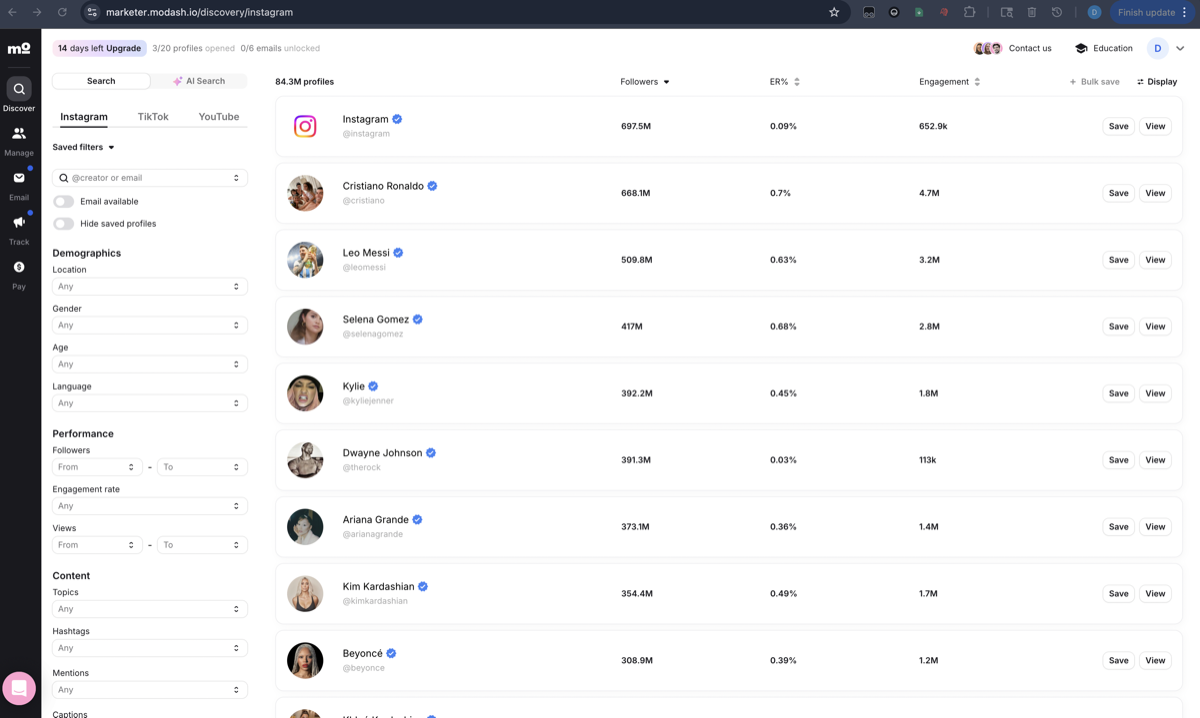
The value proposition is speed. Query millions of profiles instantly. Filter by niche, follower range, engagement rate, location. Export a list and start outreach.
What doesn't get advertised: the timestamp on that data. When was this profile last scraped? Last week? Last month? Last quarter?
A search for "fitness influencers in Los Angeles with 50K-100K followers" returns results based on whenever those profiles were last indexed. A creator at 85,000 followers in the database might be at 150,000 now, or might have dropped to 40,000 after a controversy. The 4.2% engagement rate in the results? Calculated from posts that are months old.
What Changes in Three to Six Months
Creator profiles aren't static. Consider what shifts between database updates:
- A fitness creator has a baby and pivots to parenting content. Their audience composition changes, engagement patterns shift, brand alignment transforms, but the database still labels them under "fitness" because the scraper hasn't returned.
- A creator with a historically US-based audience goes viral in Southeast Asia; sixty percent of their new followers come from Indonesia and the Philippines, yet the cached demographics still show the old split.
Phyllo's analysis of outdated influencer data documented this pattern across brands, decisions made on metrics that no longer reflect the creator's current reality.
The Index Problem
There's a second structural issue beyond data freshness: databases only surface what they've already indexed.
Search results are constrained to creators the scraper has visited. Emerging creators in niche verticals, rising talent who haven't hit the indexing threshold, anyone the crawling logic deprioritized, they don't appear in results because they don't exist in the database.
This creates a concentration effect. Multiple brands using the same databases discover the same creators. Those creators get flooded with partnership requests. Rates increase. Feeds fill with sponsored content. Authenticity erodes.
The emerging creator with a genuinely engaged 30,000-person audience and reasonable rates? Invisible until the scraper decides to index them, which might be months after they would have been a perfect fit.
What Real-Time Evaluation Looks Like
The alternative architecture fetches data at query time rather than serving cached results.
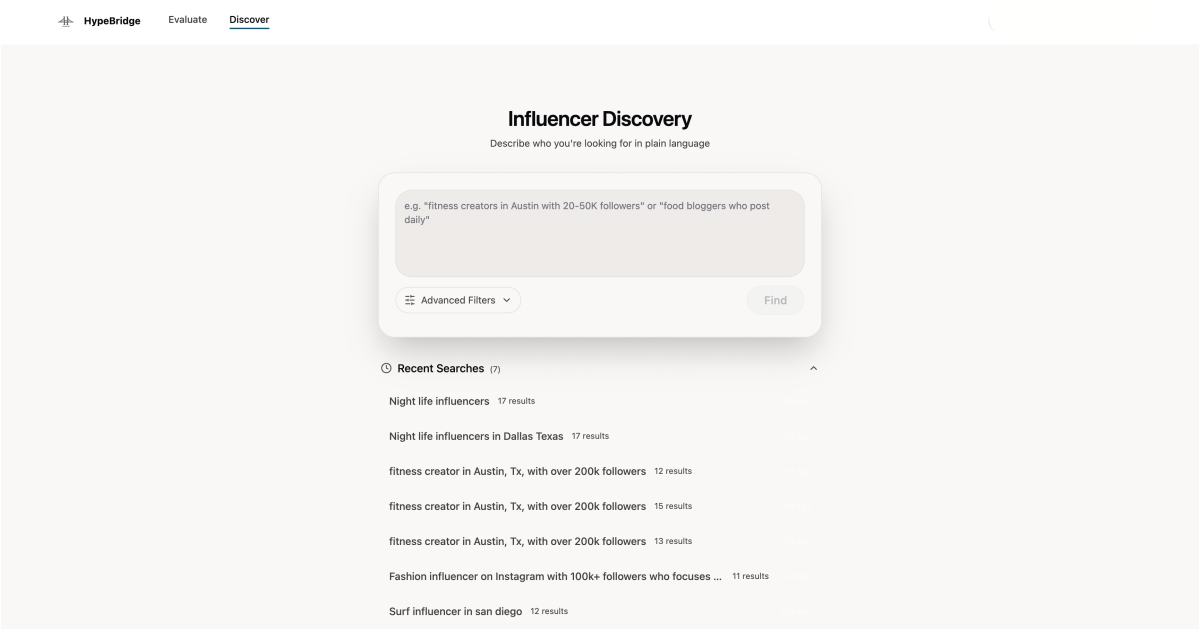
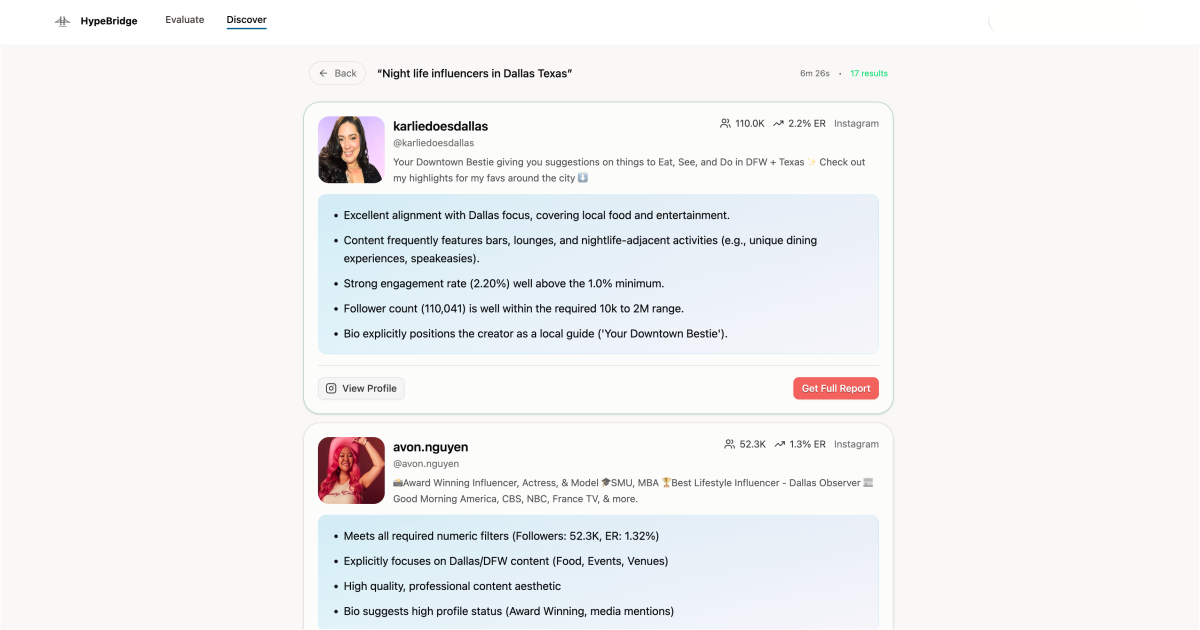
When a creator profile is evaluated in real-time, the system pulls current follower counts, calculates engagement from recent posts, analyzes audience signals from current data, and identifies growth patterns by comparing against historical baselines. The content analysis reflects what the creator is actually posting now, not what they posted when some scraper last visited.
The tradeoff is speed. Querying a pre-built index takes milliseconds. Real-time evaluation takes minutes. But the data is accurate at the moment the decision gets made.
For discovery, real-time approaches can search across platforms using current signals rather than pre-built indexes. This surfaces creators who haven't been indexed yet, often the ones with the most authentic engagement and reasonable rates.
The Maturity Gap
Database-based discovery tools were built for a different era, when real-time data was prohibitively expensive to fetch and process. That constraint no longer applies. The technology exists to evaluate creators using current information rather than historical snapshots, and AI lets us run complex computation and similarity search in real time to surface the best matches instantly.
The tooling has finally caught up to the stakes, HypeBridge now delivers real-time intelligence that keeps brands aligned with the creators they actually want to work with.
Ready to see real-time influencer data in action?
Stop making decisions on stale metrics. HypeBridge evaluates creators using live data so you can partner with confidence.
About the Author
Dami is the Founder of Nightly Traffic, Building AI-powered tools in the event tech and influencer marketing space.
View all articles by Dami