
The Role of Qualitative Data in Influencer Analysis
Key Takeaways
- •Qualitative data has been elusive on influencer platforms, forcing brand managers to watch hours of content manually to assess fit.
- •Single-dimension scores like "authenticity" or "risk" cannot capture the complexity of brand-creator fit.
- •Multimodal LLMs now enable natural language search for any criteria you can articulate.
Brand managers searching for influencer partners face an uncomfortable truth: the information that matters most is the hardest to find.
Follower counts appear in every platform. Engagement rates are table stakes. Audience demographics come standard. But whether a creator's actual content, voice, and values align with your brand? That requires watching videos. Reading captions. Parsing comment sections. Going down the rabbit hole of TikTok and Instagram, often at the risk of getting distracted on these platforms for hours.
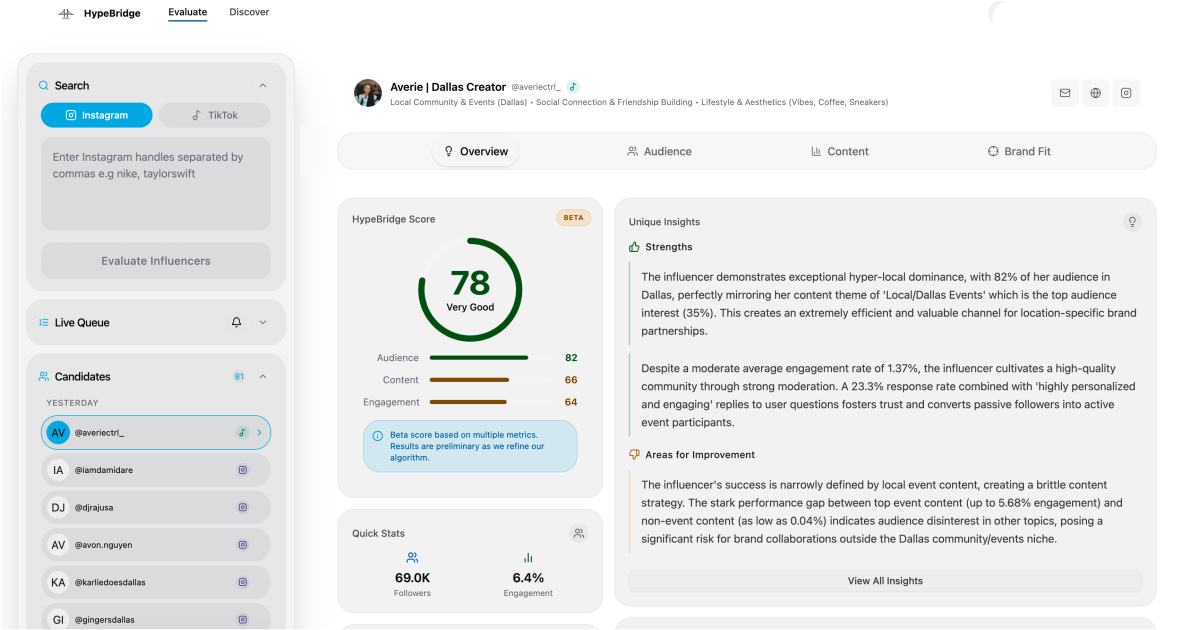
Most influencer discovery tools sidestep this problem entirely. They present quantitative pre-filters and single-dimension scores: authenticity ratings, risk assessments, engagement benchmarks; hoping these proxies capture what brands actually need to know. They don't.
The Limitation of Single-Dimension Scores
Consider a beauty brand launching a clean skincare line. What do they need from a creator partnership?
Not just someone with beauty content and good engagement. They need someone who discusses ingredient transparency. Who hasn't promoted competing brands with questionable formulations. Whose audience actually cares about clean beauty, not just makeup tutorials. Who speaks authentically about skincare routines rather than treating every product as "amazing."
An "authenticity score" of 87 tells them nothing about this. A "brand safety score" addresses risk avoidance, not positive alignment. These scores compress complex, context-dependent judgments into single numbers, losing the nuance that actually drives partnership success. The platform data becomes a pre-filter at best, and an expensive one that often surfaces the wrong candidates.
Why This Problem Persisted
For years, qualitative evaluation at scale was computationally prohibitive. Extracting meaning from video content, understanding context in captions, analyzing sentiment in comment threads; these tasks required human judgment, which doesn't scale.
Platform companies responded by building what they could build: structured databases with searchable fields. Categories. Tags. Numerical scores derived from engagement patterns. The tools optimized for what was technically feasible, not what brand managers actually needed. With multimodal AI, that constraint no longer applies.
Multimodal LLMs Change the Equation
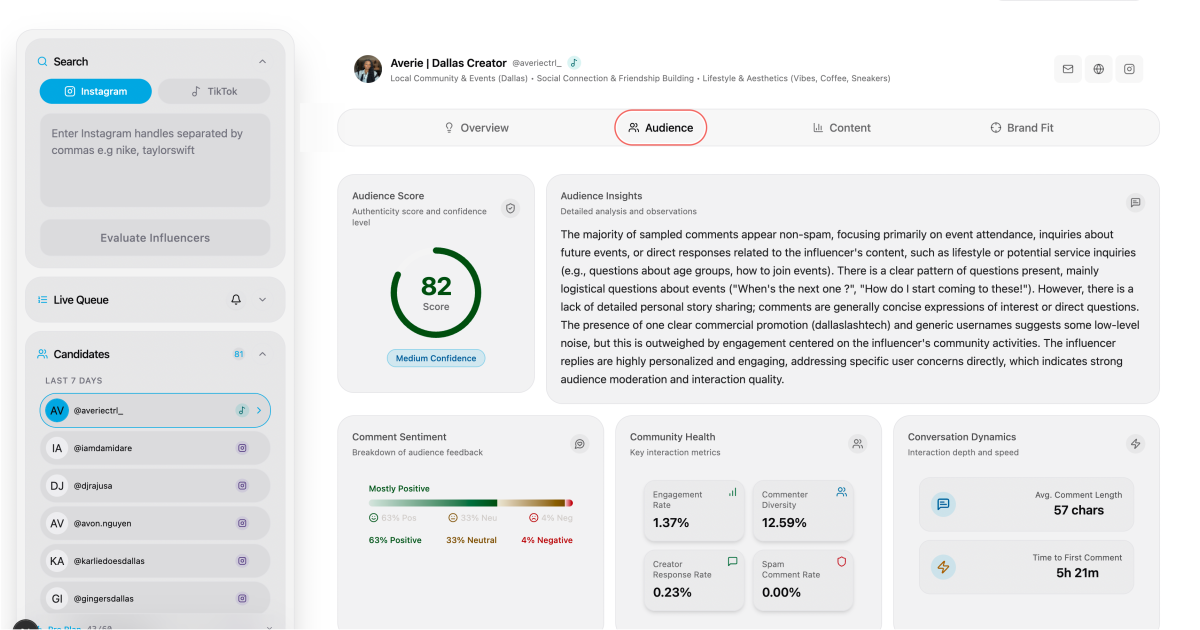
Multimodal LLMs can watch videos, read captions, and analyze comment sentiment at scale. This means brand managers can describe their ideal creator in natural language and get relevant results.
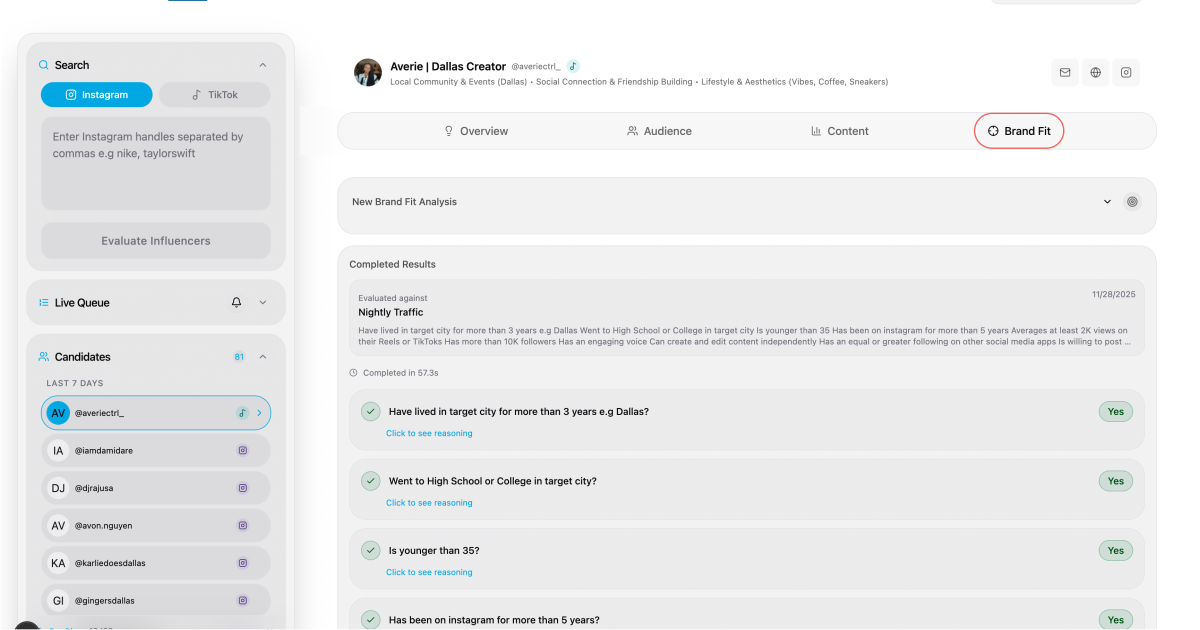
Consider the specificity now possible: "Fitness creators in Dallas who discuss mental health alongside physical training, have worked with supplement brands before but not competitors, and whose audience engages substantively in comments rather than just dropping emojis."
Or even more contextual: "Went to school in Austin, is 30-35 years old, has lived in multiple cities, previously worked in tech before becoming a creator."
This isn't semantic search over a static database or filtering on pre-computed tags. It's deep research-based evaluation that examines actual content, understands context, and matches against criteria that matter to the specific brand.
The difference in approach:
Traditional Platform
Filter: Category = "Fitness", Location = "Texas", Followers = 50K-200K, Engagement > 3%
Natural Language Search
"Dallas-based fitness creators who combine workout content with mental wellness discussions, have an engaged community that comments substantively, and haven't partnered with [competitor brands]"
What Qualitative Data Reveals
With this capability, brand managers gain access to information that was previously impractical to gather:
- Content evolution: How has the creator's focus shifted over the past year? Are they moving toward or away from topics relevant to your brand?
- Audience sentiment: What do comments reveal about how followers perceive sponsored content? Do they engage authentically or scroll past?
- Brand mention context: When the creator discusses products, is it integrated naturally or does it feel forced? How does their audience respond?
- Values alignment: What causes does the creator support? What topics do they avoid? What positions have they taken that might conflict with brand values?
The Shift in Workflow
Instead of pulling a list from a platform and manually vetting each candidate, brand managers can describe what they need, review AI-curated results with qualitative evidence, and verify only the top candidates directly.
The verification step still matters; final partnership decisions benefit from human review. But human time now goes toward evaluating 5 strong candidates rather than sifting through 50 to find them.
HypeBridge handles the video analysis, comment scraping, and sentiment evaluation; you get the qualitative insights that drive good decisions without the rabbit hole.
What This Enables
Niche campaigns that would have required extensive manual research become feasible. Brand safety extends beyond avoiding controversy to ensuring positive alignment. Creator-brand fit becomes something you can specify and verify, not just hope for.
The technology exists today. Take advantage of it with HypeBridge.
Ready to search with qualitative criteria?
Define your ideal creator in plain language. HypeBridge evaluates content, sentiment, and fit—so you don't have to watch hours of videos yourself.
About the Author
Dami is the Founder of Nightly Traffic, Building AI-powered tools in the event tech and influencer marketing space.
View all articles by Dami